


Sri Lanka's South and West Coasts: A 10-Day Itinerary for December to March, from Australia and New Zealand
Write a Review
Sri Lanka's South and West Coasts: A 10-Day Itinerary for December to March, from Australia and New Zealand
Sri Lanka is one of those destinations where getting the season right makes a real difference. From December to March, the south and west coasts are generally in their drier months, which makes the island an appealing choice for travellers from Australia and New Zealand looking for ancient cities, tea country, wildlife and beach time in one trip.
The east coast follows a different pattern, with its main beach season running from around May to September. Understanding that distinction helps decide not just where to go, but the order in which to explore the island. This guide sets out a ten-day highlights itinerary for the southern summer, what to leave for another visit, and how to make the most of the April 2027 school holidays.
Why the season flips the classic route
Many first trips to Sri Lanka are drawn as a loop: the ancient cities, Kandy, the hills, then a beach. Which beach depends on the month. Between December and March the logical finish is the south coast, so the route runs from the airport north into the Cultural Triangle, down through Kandy and the hill country, out to a national park in the south-east, then west along the coast towards Galle.
Finishing at the coast has a practical benefit beyond the weather: the most active days — early climbs, temple visits, game drives — come first, and the trip winds down with a few unhurried days by the sea before the flight home.
A ten-day highlights itinerary for December to March
Ten days covers the essentials, but it does mean changing hotels often and spending several hours on the road on most travel days. Treat it as a highlights trip; with twelve to fourteen days, the same route becomes noticeably more comfortable (see "How long to allow", below).
Day 1 — Negombo. Colombo's international airport is closer to Negombo than to the city, which makes the beach town a practical first night after a long flight.
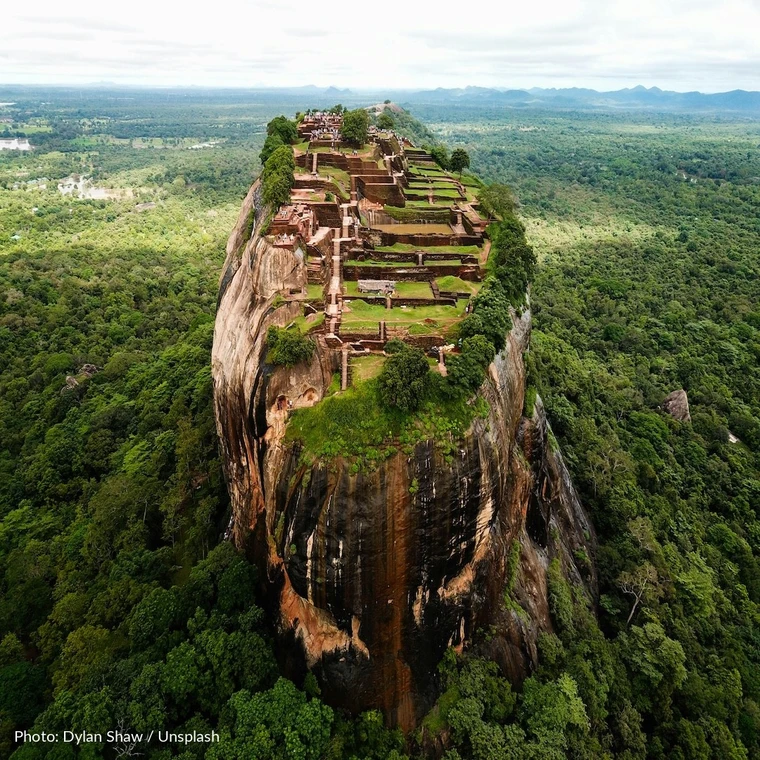
Days 2–3 — Sigiriya and Dambulla. The Cultural Triangle is the island's archaeological heart. Sigiriya's rock fortress is best climbed early, before the heat and the crowds build, and the cave temples at Dambulla are close by. Polonnaruwa's ruins make a worthwhile optional full-day excursion for travellers with a particular interest in history. For elephants, the parks around the Cultural Triangle — Minneriya, Kaudulla and Hurulu Eco Park among them — are all options; herds move between them with water levels and grazing, so the best choice for any given week is best left to a local guide who knows recent movements.
Day 4 — Kandy. The road south passes spice gardens on the way to Kandy, the hill capital and home of the Temple of the Sacred Tooth Relic. The lake, the botanical gardens at Peradeniya and an evening cultural performance are the usual picks. Kandy's Esala Perahera, one of Asia's great processions, takes place in the middle of the year and is worth a trip of its own; its 2027 dates are announced by the temple closer to the time.
Days 5–6 — Tea country and the hill-country train. The road climbs into the tea estates around Nuwara Eliya, where the air is noticeably cooler and the mornings can be misty. The hill-country train is the journey most travellers want to take. However, following extensive railway damage from Cyclone Ditwah in late 2025, the full Kandy–Ella route is not yet operating. The Nanu Oya–Ella–Badulla section has reopened, but services from Kandy remain disrupted while repairs continue. A practical alternative is to drive from Kandy into the hills, then join the train at Nanu Oya for the scenic journey to Ella. Allow flexibility and check the latest railway arrangements before travel. Nuwara Eliya and Ella are quite different places — one colonial-era and cool, the other a small, relaxed village among the hills — and families in particular may prefer two nights in one of them rather than rushing through both.
Day 7 — Yala or Udawalawe. Dropping out of the hills, the route reaches the dry south-east. Yala is the leopard-focused choice, with elephants, sloth bears, crocodiles and abundant birdlife as well; leopard sightings are never guaranteed, and the most popular areas can become crowded with vehicles. Udawalawe, slightly to the west, is particularly good for elephants and often suits families looking for an elephant-focused experience. Which park works best also depends on where the previous night is spent and which beach comes next.
Days 8–9 — the south coast. From the parks, the road meets the sea and runs west. The south coast offers several different experiences. Tangalle is a good choice for quieter resort stays and a slower pace, while Mirissa is popular for whale-watching and its beachside atmosphere. Weligama appeals to surfers and to families looking for a more sheltered bay, while Unawatuna offers a lively beach setting close to Galle. Swimming conditions vary by beach and time of year, so the location of your accommodation matters. The Dutch-era fort at Galle, a UNESCO World Heritage Site, deserves at least half a day, and slower travellers will happily spend longer. Two nights on the coast is short after such an active itinerary; three or four make it a beach holiday rather than a beach visit.
Day 10 — home. The expressway makes the run from the south coast to the airport straightforward, leaving time for a final lunch by the sea before an evening departure.
The south-coast wildlife calendar
Whale-watching from Mirissa generally runs from about November to April, when the sea on the south coast is calmer. Blue whales are the headline, with sperm whales and dolphins also seen; boats leave very early, as conditions often worsen later in the morning. Sightings vary from day to day and are never guaranteed, and travellers prone to seasickness should be prepared for a few hours on open water.
Inland, the dry season in the south-east tends to concentrate animals around water, which can help on game drives. Sea turtles nest on several southern and western beaches, although nesting activity varies by location and season. Travellers interested in conservation experiences should look for reputable, independently operated turtle protection programmes rather than assuming all hatcheries follow responsible practices.
What to leave for an east-coast trip
Trincomalee, Pasikudah and Arugam Bay are generally at their best from about May to September, when the south-west monsoon is affecting the other side of the island. That makes them a different trip rather than an add-on to this one. Jaffna and the far north have their own character and their own calendar, too. Travellers who already know they love Sri Lanka sometimes plan a second visit around the east coast in the Australian and New Zealand winter.
April 2027: school holidays and the weather
NSW government schools break from 12 to 23 April 2027, and New Zealand's school holidays run from 10 to 26 April. School holiday dates vary across Australian states and territories. Easter falls from 26 to 29 March 2027, so families should check their state or territory's school calendar when planning.
The south and west coasts can remain attractive into April, although this is a transitional weather period. Temperatures are high, humidity builds and afternoon showers or thunderstorms become more likely. April is still a rewarding time to visit, but it isn't as settled as January or February, so a little flexibility in the daily plan helps.
Sinhala and Tamil New Year falls in mid-April and gives April travel a real cultural dimension. Around the holiday, public transport, domestic travel and accommodation can be busier, and some businesses close for a few days.
Travelling with children
- A private driver-guide makes a substantial difference — the pace, the stops and the timing can all be adjusted on the day.
- Avoid too many long drives on consecutive days, and build in downtime between sightseeing and game drives.
- Choose accommodation with a swimming pool, particularly in the Cultural Triangle, where afternoons can be hot.
- Consider Udawalawe for an elephant-focused game drive rather than a long day in Yala.
- Spend longer in fewer places: one base for the ancient cities, one in the hills and a longer stretch on the coast.
Weather in the hills
The tea country sits well above the coast and feels very different: days can be mild, nights and early mornings cool, and mist and showers are possible at almost any time of year. A warm layer and a light rain jacket earn their place in the luggage, even on a beach-focused trip. Temples require shoulders and knees to be covered, and shoes are removed at the entrance, so light layers that cover up easily are useful throughout.
Getting there from Australia and New Zealand
Colombo's Bandaranaike International Airport is the main gateway. Melbourne now has direct flights with both SriLankan Airlines and Jetstar, giving Australian travellers more options. From Sydney, Brisbane, Perth, Auckland and other cities, connections through hubs such as Singapore, Kuala Lumpur or Bangkok are generally the most practical. Flight schedules and frequencies vary, so check the options for your intended travel dates.
Australian and New Zealand passport holders are currently eligible for a free 30-day tourist ETA (Electronic Travel Authorisation), which must be obtained before arrival. Entry requirements and visa arrangements can change, so check the official Sri Lankan immigration website before booking and again before departure. It is also sensible to check your government's current travel advice for Sri Lanka.
Distances look short on the map, but roads through the hills are winding and slow. Most visitors travel with a private driver-guide, which makes the itinerary above comfortable rather than rushed.
How long to allow
Ten days is a highlights trip: the Cultural Triangle, Kandy, the hill country, a national park and a short stay on the coast. Twelve to fourteen days is the more comfortable option, allowing a second night in the hills, a day for Polonnaruwa or Anuradhapura, and three or four nights on the coast. With a week, it is better to choose two regions — the Cultural Triangle and the coast, or the hills and the coast — than to try to see everything.
Frequently asked questions
Which Sri Lanka coast is in season in January?
The south and west coasts — Galle, Unawatuna, Mirissa, Tangalle and Bentota — are generally in their drier season from December to March. The east coast is usually best from about May to September.
Can you see Sri Lanka in ten days?
Ten days is enough for a highlights trip covering the Cultural Triangle, Kandy, the hill country, a national park and the south coast, with a private driver-guide. Twelve to fourteen days makes the pace noticeably gentler.
When is whale-watching season at Mirissa?
Generally from about November to April. Sightings vary and are never guaranteed, and boats leave early in the morning.
Is the Kandy to Ella train running?
Not as a through route at the time of writing. Following damage from Cyclone Ditwah in late 2025, the Nanu Oya–Ella–Badulla section has reopened, but services from Kandy remain disrupted while repairs continue, and no date has been confirmed for full restoration. Many itineraries drive from Kandy into the hills and join the train at Nanu Oya. Check the latest arrangements close to travel.
Do Australians and New Zealanders need a visa for Sri Lanka?
An ETA is required before arrival. Australian and New Zealand passport holders are currently eligible for a free 30-day tourist ETA; check the official Sri Lankan immigration website for the latest requirements.
Is April a good time for a family trip?
It can be. The south and west coasts can remain attractive into April, but it is a transitional period, with more chance of afternoon showers than in January or February. Fewer hotel changes and some flexibility in the daily plan help.
Thinking of Sri Lanka this summer — or in April?
Perhaps you're after somewhere warm between December and March, or the April school holidays are the window you're working with. Either way — whether the route is still a blank page or Sri Lanka has been on the list for years — Pack Ya Bags is happy to help.
Tell them which of the two periods you're considering, how many are travelling and whether the beach, the hills or the wildlife matters most. They'll suggest a shape for the trip that suits the season. Drop a line to info@packyabags.com.
- By:
- David Chandraraj
- Published:
- 3 November 2026