



Best of South Korea: A 10 Day Cultural, Food & Autumn Itinerary from Australia & New Zealand
Write a Review
Best of South Korea: A 10 Day Cultural, Food & Autumn Itinerary from Australia & New Zealand
Korea keeps getting filed under "stopover" by Australian and New Zealand travellers — two nights in Seoul on the way to somewhere else, a palace, a barbecue dinner, gone. That filing is out of date. Give the country ten days and it delivers what a first Japan trip delivers: fast trains, deep history, a food culture worth planning around, and — if you time it for October or November — one of Asia's great autumn-colour seasons, with plenty of spectacular foliage beyond Japan's best-known koyo destinations. This is the 10 day South Korea itinerary we'd hand a first-time visitor: Seoul, the DMZ, Gyeongju, Busan and Jeju, in an order that makes the trains do the work.
The 10 days at a glance
| Days | Base | The point of it |
|---|---|---|
| 1–3 | Seoul | Palaces, food alleys, markets — plus a half-day DMZ tour |
| 4–5 | Gyeongju | The old Silla capital — tomb mounds, temples, lantern-lit ponds |
| 6–7 | Busan | Coastal city energy: seafood markets, hillside villages, beach mornings |
| 8–10 | Jeju | Volcanic island finish — craters, waterfalls, sea-diving grandmothers |
Days 1–3: Seoul, done properly
Seoul rewards a slower start than most capitals. Spend the first morning at Gyeongbokgung, the largest of the five Joseon palaces — the changing of the guard is worth timing, and hiring a hanbok gets you into the palaces free — and you'll see plenty of visitors exploring the courtyards in beautiful hanbok. Bukchon Hanok Village sits just uphill, a working neighbourhood of traditional houses between the palaces.
Then eat. Seoul's food scene runs from market floors to fine dining, and the markets are where to begin: Gwangjang for bindaetteok (mung-bean pancakes) and mayak gimbap, Namdaemun for its kalguksu (knife-cut noodle) alley. Book a kimchi-making class for one afternoon — it sounds touristy and is anything but; you'll leave understanding fermentation timings, regional styles and why kimchi varies so much from household to household. Evenings belong to the barbecue alleys and, for the willing, a noraebang (karaoke room).
Day three is for the DMZ. The half-day tours from Seoul visit the third infiltration tunnel and the Dora Observatory looking into North Korea — sobering, strange and genuinely worthwhile. Most tours ask for advance booking with passport details — requirements vary by operator — and access arrangements can change at short notice, so treat this as a book-early item and keep a flexible half-day in reserve.
K-pop deserves a line of its own. If it matters to you (or to a teenager travelling with you), Seoul delivers everything from exhibition spaces and themed cafés in Gangnam to dance classes where you learn actual choreography. If it doesn't, the city won't force it on you.
Days 4–5: Gyeongju, the museum without walls
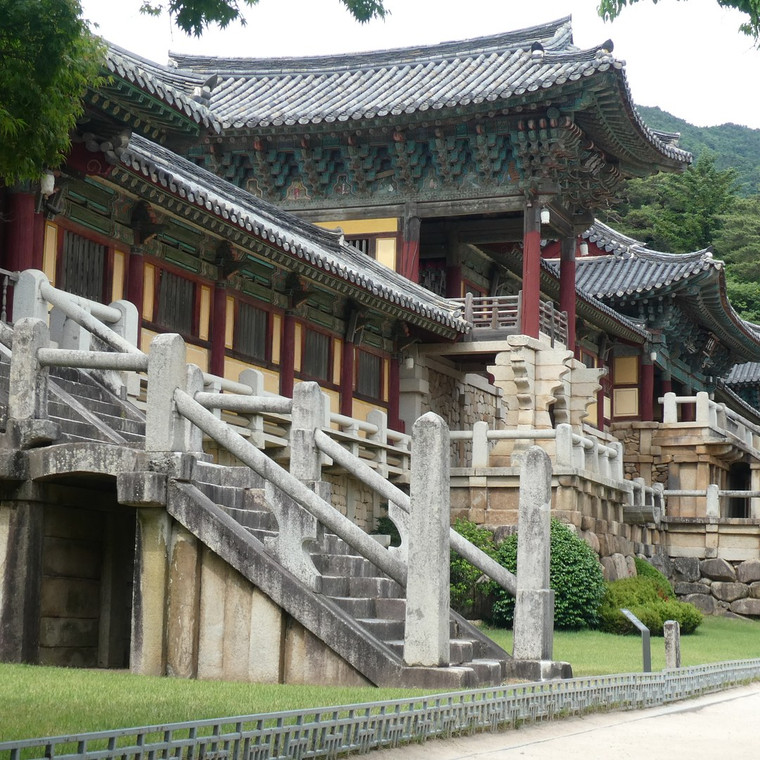
Take the KTX south to Singyeongju — roughly two hours from Seoul, depending on the service. Gyeongju was the capital of the Silla kingdom for close to a thousand years, and the whole city reads like an open-air museum: grassy royal tomb mounds rising out of downtown, the observatory tower of Cheomseongdae, and Bulguksa temple with the Seokguram grotto in the hills above. At dusk, Donggung Palace and Wolji Pond is one of Korea's most atmospheric historic sites after dark — go after dinner rather than before.
Autumn is Gyeongju's best season: the tomb mounds turn gold and the ginkgo avenues go saffron. Two nights is right for most travellers.
Days 6–7: Busan, Korea's second city
A short train ride south and you're in Busan, which feels nothing like Seoul — looser, saltier, built between mountains and sea. The non-negotiables: Jagalchi fish market at breakfast, where you choose your fish downstairs and eat it upstairs; Gamcheon Culture Village, the pastel hillside district; and Haeundae or Gwangalli beach for an evening walk under the bridge lights. Haedong Yonggungsa, the temple built on coastal rocks, is the postcard — go early, it's popular for good reason.
Food to plan around here: dwaeji gukbap (pork and rice soup — Busan's signature), fresh hoe (Korean-style raw fish), and ssiat hotteok, the seed-stuffed sweet pancakes sold in BIFF Square. Each region of Korea genuinely eats differently, and riding the peninsula south is the easiest way to taste that.
Days 8–10: Jeju to finish
Fly to Jeju from Busan — it's under an hour, and the short flight makes Jeju an easy addition to the itinerary. Jeju is Korea's volcanic holiday island: the sunrise crater of Seongsan Ilchulbong, waterfalls at Cheonjiyeon and Jeongbang, lava-tube caves, and the haenyeo — the celebrated freediving women, many of whom continue diving well into older age, harvesting shellfish by breath alone. Hallasan, the shield volcano at the island's centre, offers day hikes from gentle to serious.
Three days lets you circle the island without rushing. If islands aren't your thing, an alternative shape is two extra nights in Busan and a day trip along the coast — but for most first-timers Jeju is the right ending.
When to go: the autumn colour calendar
Korea's autumn colour moves gradually from the mountains into the cities and south. The first foliage can appear in high mountain areas from late September, with many of the best-known mountain destinations reaching peak colour through October, and Seoul and central Korea generally following in late October or early November. Southern areas and Jeju can run later, and the exact timing shifts each year with the weather — treat the calendar as a guide rather than a guarantee. Naejangsan and Seoraksan national parks are the famous foliage names if you can add a day trip. Practical translation: a late-October to early-November departure, run north to south as this itinerary is ordered, can give you a good chance of following the colour south down the peninsula.
If autumn colour is the priority: reshape the route to Seoul → Seoraksan → Gyeongju → Busan → Jeju. The classic first-timer shape above misses Korea's two most celebrated foliage destinations — Seoraksan and Naejangsan — so build at least one of them in if the leaves are the whole point of the trip.
Spring (late March and April's cherry blossom, notably around Gyeongju and Jinhae) is the other headline window. Summer is hot, humid and greener than the postcards; winter is cold, clear and underrated for food. Avoid planning key sightseeing around Chuseok, the autumn harvest holiday, when much of the country is travelling — the dates shift each year, so check them against your window before locking flights.
Logistics from Australia & New Zealand
Sydney has direct services to Seoul's Incheon airport, while most other Australian and New Zealand cities have one-stop options via the usual Asian hubs. Once you land, no car is needed for this itinerary: the KTX covers Seoul to Gyeongju and Busan, city metros are excellent and signage is bilingual. Book KTX seats ahead in peak autumn weeks. Ten days is the honest minimum for this shape; twelve lets you build in a Seoraksan foliage detour before heading south, or a slower Jeju. Korea also pairs naturally with Japan in a single trip — the flight is short, and the autumn seasons overlap.
On bases: in Seoul, stay around Myeongdong or Insadong for first-trip convenience, or Hongdae if you want the night-life and student energy; in Busan, Haeundae puts you on the beach while Nampo puts you in the markets. Gyeongju's special option is a hanok stay — a night in a traditional courtyard house with ondol underfloor heating. It is Korea's own version of a traditional stay, and worth building into the itinerary deliberately rather than hoping it happens.
A note on pace: this shape averages a city move every two to three days, which suits travellers who like momentum. If that sounds tiring rather than energising, drop Jeju, add the nights to Seoul and Busan, and keep the DMZ and Gyeongju — the itinerary still works, it just breathes more.
Frequently asked questions
Is South Korea good for first-time visitors to Asia? Yes — arguably one of the easiest entries. The rail network is fast, reliable and easy to navigate, cities are generally very safe and easy to explore on foot, cards are widely accepted in cities (carrying some Korean won remains sensible), and the food is approachable even for cautious eaters.
When is peak autumn colour in Korea? Late October to early November for Seoul and central Korea, drifting to mid-November in the south and on Jeju. Mountain national parks turn earlier — the first colour can appear in the high mountains from late September.
Can Korea be combined with Japan? Easily. Many travellers pair 10 days in Korea with a week in Japan — the short flight between them makes it one of Asia's most natural two-country itineraries, and their autumn seasons overlap — Korea's mountain colour generally arrives earlier than Kyoto's famous late-November display.
If this is the year Korea graduates from stopover to main event, Pack Ya Bags can help — their reservations team has been putting together Korea itineraries timed to the autumn window, and they're happy to be a sounding board even while your plans are half-formed. Start the conversation here.
- By:
- David Chandraraj
- Published:
- 11 August 2026


