



Sublime Scandinavia and the Baltics: Twelve Ports from Amsterdam to Stockholm
Write a Review

Sublime Scandinavia and the Baltics: Twelve Ports from Amsterdam to Stockholm
It's one of the hottest places to cruise, for the coolest of reasons. With long summer days and ever-changing scenery, Europe's northernmost countries are ideal to explore by cruise ship. On offer is an impressive lineup of Scandinavian and Baltic capitals, cities and medieval towns, along with dramatic fjords, rugged coastlines, and a host of new experiences from cuisine to culture. Here's our lowdown on what you'll see, and do.
Amsterdam
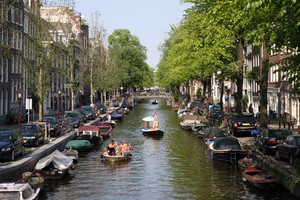
It is one of the coolest cities in Europe, the biggest city in the Netherlands, and has long been a magnet for tourists, artists and creatives of all kinds. Just saying its name conjures up diverse images: 17th-century architecture, narrow canals with houseboats, and a lineup of world-class museums. Get out on foot, or grab a bike, and explore Amsterdam's districts, making sure to relax in a canal-side café with a coffee and a pastry.
Pick of the excursions: The Van Gogh Museum, home of the largest collection of masterworks by the great Dutch artist, and a scenic canal cruise.
Berlin (Warnemünde)
Since the infamous wall was dismantled in 1989, Berlin has enjoyed a new lease on life as the capital of a new Germany. Although much of what was historic in Berlin was destroyed during World War II, many churches and landmarks have been rebuilt. Sightseeing essentials are confined to a relatively small area, including the Brandenburg Gate, the Reichstag, the Holocaust Memorial, Potsdamer Platz, Berlin Cathedral and Checkpoint Charlie.
Pick of the excursions: A visit to Charlottenburg Palace, one of the few sites left in Berlin which reflects the grandeur of a bygone era.
Bruges (Zeebrugge)
Bruges is one of the most visited cities in Europe, a fairytale medieval town to which visitors flock for many reasons: to meander along picturesque cobbled lanes, explore spectacular Flemish and Renaissance architecture, and hang out in the Markt and Burg main squares. Bruges has a bustling café life and restaurants with fine food, and offers great people-watching. Order a bowl of "golden frites" as a snack with a Hoegaarden beer, or with local mussels cooked in creamy garlic and white wine.
Pick of the excursions: A canal boat tour, so you can gaze up at Bruges' historic buildings and stone bridges from the water.
Copenhagen
Copenhagen is home to some of the best-preserved medieval architecture in Europe, as well as being a cosmopolitan city with people who know how to have fun. On the surface the city is a mix of historical buildings, church spires and modern architecture, all connected by cobbled streets, but at its heart is a thriving café, bar and shopping scene, making it one of the hippest places in Scandinavia.
Pick of the excursions: The Dutch Renaissance Frederiksborg Castle on Lake Slotssø, home to a museum with an outstanding collection of portraits.
Gdansk (Gdynia)
Gdansk has a long history dating back to the 10th century, and despite being the focus of fierce battles during World War II, its historic Main Town was rebuilt in the post-war years. Today, entering this stunning historical quarter is like stepping back in time. "Must sees" include the main square's Dutch Renaissance-style mansions, St Mary's Church, believed to be the largest brick church in the world, and the medieval Great Mill.
Pick of the excursions: Malbork Castle, a UNESCO-listed medieval fortress and museum, and the world's largest brick castle, overlooking the River Nogat.
Helsingborg
This medieval town sits on the shores of the Øresund, a narrow strait separating Sweden and Denmark, and was then a hot, new destination on Baltic cruises. Helsingborg is also one of the oldest cities in Sweden, with quaint cobbled streets and castle ruins, and its twin city, Helsingør, is just four kilometres across the Øresund in Denmark. Both cities have endured a torrid past including many wars, marked by the historic landmarks of Kronborg Castle on the Danish side and the fortress of Kärnan on the Swedish side.
Pick of the excursions: The Kullaberg Peninsula, a protected nature reserve that is home to several species of birds, Stone Age archaeological treasures, and sweeping ocean views.
Helsinki
The "Daughter of the Baltic" and Finnish capital has many personalities, including a strong Russian influence thanks to the close proximity of St Petersburg. It was founded in 1550 by the Swedish King Gustav Vasa, and boasts many monuments, including the Lutheran Cathedral, the domed Uspenski Cathedral, and impressive neoclassical buildings. The city is also bounded on three sides by the Baltic Sea, and during summer its waterfront is a vibrant hub, whether you're having lunch at a café in the sun or taking a boat tour of the waterways.
Pick of the excursions: Suomenlinna Fortress, a Baltic UNESCO World Heritage Site to explore on foot, before relaxing in a beer garden.
Klaipeda
This was then another hot new port of call: a quaint Lithuanian harbour town known as Memel for much of its history. Klaipeda was part of Prussia and Germany until 1923, when it was taken over by neighbouring Lithuania and renamed, and over the centuries it enjoyed long periods of economic prosperity fuelled by grain and timber production. In 1945 it was captured by the Soviet Red Army, but today it's back in Lithuanian hands and one of the Baltic's finest ports, with highlights including lovely timber-frame buildings dating back to the 18th century.
Pick of the excursions: Zemaitija National Park, a spectacular nature reserve covered in lush green forests and brilliant blue lakes.
Oslo
Norway's capital is located on the Aker River at the head of the Oslo Fjord. It has a provincial feel and fewer tourists, and is a city blessed with modern architecture, lakes and parks, world-class museums, and public statues at every turn. The city's residents are proud of their pristine forests and fjord, and for visitors by ship, the sail in and sail out through the Oslo Fjord offers spectacular views of the dramatic local landscape.
Pick of the excursions: A cruise on the Oslofjord on a restored Norwegian ship, passing picturesque inlets, bays and islands dotted with summer homes and villages.
Riga
Riga was founded in the 13th century, and is the geographical centre of the Baltic States as well as one of Northern Europe's best-kept secrets. The capital of Latvia sits on the Daugava River, and is a happening place boasting big-city attractions, along with opera, music and ballet, and museums with displays of everything from art to the history of medicine. Old Riga, the historic centre of the city, is a UNESCO World Heritage Site, with Art Nouveau architecture among the finest in Europe.
Pick of the excursions: The Latvian resort town of Jurmala, which has over 30 kilometres of white-sand beaches flanked by historic wooden homes.
St Petersburg
St Petersburg is a fascinating city, founded in 1703 by Peter the Great and the capital of Imperial Russia from 1712 to 1918, and today it's Russia's cultural capital, with lavish architecture including Tsarist-era palaces and domed churches. Many ships spend at least one night in port here, affording guests the opportunity to explore the city sights one day and opulent countryside palaces the next, with a night out in between. Art is also a key attraction, the city being akin to a living museum.
Pick of the excursions: The world-famous Hermitage, which is home to Matisse, Picasso and Rembrandt collections, and if you stay overnight, the Russian ballet.
Editor's update: Western cruise lines stopped calling at St Petersburg after Russia's invasion of Ukraine in February 2022, and no major line has scheduled a call there for 2026. This entry is kept as a record of the Baltic itinerary as it was.
Stockholm
Stockholm is among the world's top cruising ports, and not just for the sail in and sail out past some 24,000 islands stretching for around 80 kilometres east of the city. It's a modern and beautiful capital city which has successfully hung on to both its history and its scenic landscape, which includes 14 islands separated by water and joined by 57 bridges. The Old Town dates back to the 13th century and is criss-crossed by narrow streets and packed with medieval buildings. As cruise ports of call go, it has something for everyone.
Pick of the excursions: The world's first permanent ice bar, kept at a crisp minus 5°C year-round, with an interior and glasses made of pure, clear ice from northern Sweden.
More from UTM: Oceania Marina in Her First Season: Málaga to Copenhagen, Cruising the Greek Islands: Santorini, Rhodes and Athens and 20 Bucket-List Cruise Journeys.
Many of these ports deserve more than a single day ashore, and Pack Ya Bags designs on-the-ground tours and itineraries through Scandinavia and the Baltics for travellers from both sides of the Tasman. Share your wish list at info@packyabags.com
Editor's note. This article brings together UTM's original Sublime Scandinavia and the Baltics feature, first published in two parts, into a single piece. Consolidated and fact-checked on 22 September 2026.
- By:
- Joanna Hall