



Pacific Islands from Australia and New Zealand: Fiji, the Solomons & Tonga — Which Island for You?
Write a Review
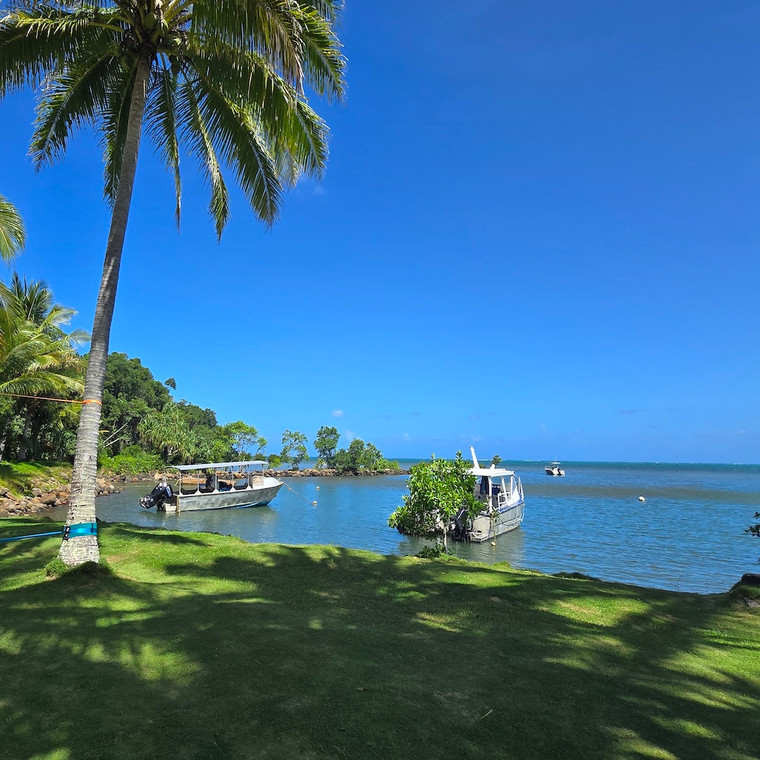
Pacific Islands from Australia and New Zealand: Fiji, the Solomons & Tonga — Which Island for You?
Introduction: the Pacific isn’t one trip
For Australians and New Zealanders, the Pacific is the closest thing we have to a backyard ocean — and it is the most under-thought of our holiday regions precisely because it feels familiar. ‘The islands’ gets used as if it described a single trip. It doesn’t. Fiji, the Solomons and Tonga sit within a few hours of each other and offer almost completely different holidays: one easy and family-ready, one remote and unhurried, one defined by three months a year when you can swim alongside humpback whales.
This guide compares the three, with PNG, Samoa, Vanuatu and the Cook Islands in support, so you can match the island to the trip rather than the other way round. We have kept dollar figures out of it — prices move with season, resort tier and flight timing in ways a single article can’t pin down honestly — and focused on the things that are comparatively stable: the seasons, the flights, and the character of each place.
Fiji — the easy one (and that’s a compliment)
Fiji is the Pacific’s default for a reason. It is the most connected — direct flights from Australia’s east coast and New Zealand reach Fiji in around three to five hours, with Perth also served by direct flights. By some distance Fiji has the largest tourism infrastructure and visitor numbers in the Pacific, with the deepest range of places to stay — from family resorts with kids’ clubs to adults-only island hideaways to liveaboard dive boats. The main island, Viti Levu, is the gateway; the real magic is offshore in the Mamanuca and Yasawa island chains, or on the quieter Coral Coast.
It suits the broadest range of travellers: families who want a low-stress week with a short flight, couples after a honeymoon island, and divers drawn to the soft-coral reefs and the famous shark dives in Beqa Lagoon. If a client wants the Pacific to be simple, warm and reliable — Fiji is the answer, and the dry season (May to October) is its calmest, sunniest window.
The Solomon Islands — off-grid, and one of the great dive frontiers
The Solomons are the opposite of Fiji, and that is the appeal. This is genuine off-grid Pacific — Western Province, Marovo Lagoon (often described as the world’s largest saltwater lagoon), a scatter of small lodges, and very few other travellers — the Solomons remains one of the least-visited countries in the South Pacific, and that scarcity is part of the appeal. For divers it is a frontier: WWII wrecks in ‘Iron Bottom Sound’, drop-offs and reef walls thick with fish, and the kind of underwater visibility that defines a dive trip.
It is not a first-timer’s resort holiday and it does not pretend to be. Flights route via Brisbane into Honiara, and from there it’s light aircraft and boats to the dive lodges. The travellers who love the Solomons are the ones who have already done the easy Pacific and want somewhere that still feels unfound — divers, snorkellers, and people happy to trade a kids’ club for a place with almost no one else on the reef.
Tonga — three months you can’t get anywhere else
Tonga’s case is the simplest and the most singular: from roughly July to October, humpback whales gather in its warm, sheltered waters to calve, and Tonga is one of the very few places on earth where you can responsibly swim with them under licensed guides. For travellers for whom that is the dream, nothing else on this list competes — and the swim-with operators, who run small group numbers by regulation, fill their best dates a long way ahead.
Outside the whale season Tonga is a quieter, more traditional Pacific — Vava’u’s sailing waters, low-key island stays, and a culture that keeps Sunday genuinely sacred. But the whales are the headline, and a Tonga trip is best planned around the July-to-October window with the operator booked first and the rest built around it.
PNG, Samoa, Vanuatu and the Cook Islands
Four more islands round out the choice. Papua New Guinea is the Pacific's deep cultural and dive frontier — highlands sing-sings, Sepik River villages, and some of the world's richest coral reefs around Kimbe Bay and Milne Bay — reached via Brisbane into Port Moresby and best suited to travellers comfortable with serious adventure. Samoa is dramatic and culturally rich — waterfalls, the To Sua ocean trench, and a strong sense of fa'a Samoa (the Samoan way) — and it combines easily with Australia, New Zealand or Fiji itineraries. Vanuatu is the adventurer's pick, with an accessible active volcano on Tanna and good diving and blue holes around Espiritu Santo, all a short hop from the Australian east coast. The Cook Islands — Rarotonga and the impossibly pretty Aitutaki lagoon — are the most New-Zealand-connected of the group and a honeymoon favourite, with a relaxed, English-speaking ease.
How to think about the choice
None of these islands is single-note. Fiji has off-grid hideaways and dive boats alongside the family resorts; the Solomons has quiet remote lodges for travellers who simply want somewhere unfound, not just divers; Tonga is a low-key cultural island outside the whale window; and PNG, Samoa, Vanuatu and the Cooks each cover ground the headline three don't. The decision usually comes down to three practical variables — how far you're prepared to fly internally, the season you can travel in, and whether there's a fixed bucket-list moment (whales, a particular dive, an empty lagoon) the trip has to deliver. Get those honest and the right island tends to emerge.
When to go
Across much of the South-West Pacific, the drier and cooler season runs roughly May to October — calmer seas and the most reliable sun. This is generally the best window for diving and for the clearest water across much of the region. Tonga’s humpback season (July–October) sits neatly inside it. The wet season (November to April) is hotter and more humid with afternoon storms and a tropical-cyclone risk, though it has its own quieter, greener appeal and lower-season ease. For a first Pacific trip, and for anything dive- or whale-led, plan inside the dry season.
Getting there
Flights are the practical divider between these islands. Fiji is the most connected — direct and frequent from Sydney, Melbourne, Brisbane, Perth, Auckland, Wellington and Christchurch. The Cook Islands connect most easily via Auckland; Samoa and Vanuatu have direct services from the Australian east coast and across the Tasman. The Solomons route via Brisbane into Honiara, then onward by light aircraft. Tonga is typically reached via Auckland, Sydney or Fiji, depending on schedules. Because the onward legs (especially in the Solomons and Tonga) run on smaller schedules, the internal flights are the part of a Pacific itinerary most worth getting right early.
Are they family-friendly?
Fiji is the standout for families — short flights, kids’ clubs, calm lagoons and a deep range of family resorts make it the easiest Pacific trip with children, and the winter school-holiday window (a few weeks away) is its peak. Samoa and the Cook Islands work well for slightly older, more adventurous families. The Solomons and a whale-season Tonga trip lean more towards divers, couples and confident-swimmer teens than little ones — which is part of choosing the right island for who’s travelling.
Frequently asked questions
What’s the best time to visit the Pacific Islands? The dry season, roughly May to October — calmer seas, reliable sun and the best diving. Tonga’s humpback-swimming season falls inside it, July to October.
Which Pacific island is best for families? Fiji — short flights from Australia and New Zealand, kids’ clubs, calm lagoons and the widest range of family resorts.
Where can you swim with humpback whales? Tonga is one of the few places in the world where you can responsibly swim with humpbacks under licensed guides, from about July to October.
Is the Solomon Islands good for diving? Yes — it’s one of the Pacific’s great dive frontiers, with WWII wrecks, reef walls and excellent visibility, suited to travellers who want somewhere remote.
How long should a Pacific trip be? A week is plenty for a single-island Fiji reset; allow more for the Solomons or Tonga, where the internal flights and boat transfers add time.
Want a hand matching the island to the trip?
The hardest part of a Pacific holiday isn’t the booking — it’s choosing which island actually fits the people travelling and the time of year. That’s exactly the kind of thing it helps to talk through, and Pack Ya Bags is glad to be a sounding board, whether you’ve half-decided on Fiji or you’re trying to work out if a whale-season Tonga trip is realistic for your dates.
Send an email to info@packyabags.com or visit Pack Ya Bags Pacific Island Sample Tours
- By:
- David Chandraraj
- Published:
- 02 June 2026


