


Cruising the Greek Islands: Santorini, Rhodes and Athens
Write a Review

Cruising the Greek Islands: Santorini, Rhodes and Athens
With more than 6,000 islands and islets scattered haphazardly across the Aegean and Ionian Seas, the Greek Islands have become synonymous with great beaches, wonderful food, unique wines, friendly people, and a fascinating and rich history which is heavily influenced by their maritime surroundings. Around 230 of the islands are actually inhabited, and combined they provide some of the most diverse landscapes of any island group, with thousands of kilometres of beaches of black sand, white sand and pebbles, sheltered by stunning bays and coves, volcanic mountains, lush forests, deserts, and of course the deep blue of the Mediterranean.
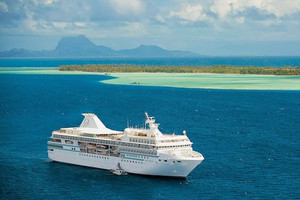
For many people, a cruise is the best way to see the region's top highlights, which often feature on Eastern Mediterranean or dedicated Greek Island cruises. Two of the most popular destinations are Santorini in the Cyclades and Rhodes in the Dodecanese group, while the capital of Greece, Athens, is often a port of call, or the departure point for many of these cruises.
Santorini
Of all the Greek islands, Santorini stands out for its natural beauty. It was created out of a cataclysmic event some 3,500 years ago, when a volcanic eruption wiped out the island's settlements and devastated the coast of nearby Crete, and it's believed to have been largely responsible for the demise of the mighty Minoan civilisation. Three quarters of Santorini's land mass vanished, and the nearby islands of Palaia Kameni and Nea Kameni were pushed up higher, forming the dramatic caldera which is now filled with water.
Plato told of the utopian city of Atlantis, and later writers have linked its end to this eruption and others that followed. The Atlantis connection is not supported by evidence, but wandering the cobbled alleys and cliff-top paths could convince the most unimaginative that the theory had some credibility. The island still undergoes eruptions periodically, the last in 1950, and the ancient Santorini residents accepted the fact that the island would need to fight the gods of earth and fire to win the battles against the volcanoes and earthquakes.
Most land-based visitors to Santorini arrive by ferry, with the natural phenomenon undoubtedly best seen from the ocean, but it is also an unforgettable experience from a cruise ship sail in or sail out. From the ocean, the sheer scale of the towering volcanic cliffs is put well and truly in perspective, as is the realisation that you're actually floating above an active volcano, and perched along the rim of the dramatic caldera are whitewashed homes, churches, cafés, restaurants and hotels with arguably the most stunning views in the world. On land, the main town of Fira can be overrun with tourists in the peak season from June to August, but outside of this time it does become more genteel and relaxed, despite the abundance of tourist shops.
A 20 to 30-minute trip away by car or moped to the north is the quieter and more refined town of Oia, which seems to have avoided the trappings of mass tourism with a different set of bylaws which limits the numbers of bars and late-night music. The large neoclassical homes have been rebuilt, as have the traditional fishermen's homes built centuries ago, and this town of just over 1,000 seems to exist in a world of its own. And its sunsets are legendary, with the main point looking directly west, and on most evenings hundreds of tourists, and locals, sit quietly and wait for the highlight of the day in this part of the world. There's not actually that much to do in Oia, and apart from the Maritime Museum, a typical day revolves around where to have breakfast, lunch and a fish dinner, and which rock to sit on to watch the sunset.
The beaches of Santorini are also an attraction in their own right. They are typically Mediterranean, with bright blue water and volcanic rocks, and they range from the tourist resorts of Perissa and Kamari to the famous Red Beach, to the quieter Cape Columbo, Perivolos and Agios Georgios.
Editor's update: Red Beach was closed to the public after rockfalls during the earthquake swarm of February 2025, and the cliff path to it has been closed repeatedly because of landslide risk. Check locally before going.
North-east of Oia, Sigalas Winery provides a fun and interesting taste of Santorini wines, which somehow thrive in this arid environment, and they can be sampled with a cheese platter. Despite being super busy in the peak season, the locals themselves remain cheerful and are proud of their stunning island home. They appear happy to pass on any insider knowledge of where to eat and where the quiet beaches are, and the island is so compact and welcoming you'll feel like one of the locals within a very short time.
Rhodes
The island of Rhodes has a reputation as a sensual, subtropical paradise, but it also possesses one of the best-preserved medieval cities in Europe, and it's a combination of a hedonist's hangout and a history buff's fantasy come to life. Surrounded by medieval walls with seven magnificent gates, entering Rhodes Old Town is a step back into more than two thousand years of history, with fantastic and well-preserved monuments, squares and houses. But that's not to say it's one big museum. Six thousand people live inside the walls, and they give a real sense of life to a city which is a joy to discover.
True, there are restaurants, bars and cafés scattered throughout the Old Town, but even with a little imagination it's not hard to imagine that this is a place that has changed little for hundreds of years. The fourth-largest Greek island, Rhodes is well known as a great place for sun worshippers looking for an idyllic beach retreat, but few people realise it's also home to the World Heritage-listed medieval city, framed by its ancient harbour, which was founded two and a half thousand years ago. Archaeologists believe that one of the Seven Wonders of the Ancient World, the Colossus of Rhodes, stood sentinel over the harbour and the city until an earthquake destroyed it in 226BC. The Colossus was confirmation of the fact that Rhodes was an important economic centre in the ancient world, thanks to its location where the Aegean Sea meets the Mediterranean.
Like most of the Mediterranean islands, Rhodes' history is essentially a long chronological list of conquerors and occupiers, dating back to 408BC when the local islanders founded the city. Their independence effectively came to an end in 164BC, when Rhodes fell under the sway of Rome, although its culture remained intact and it developed into one of the great centres of learning, science and the arts. From the seventh century there were periodic attacks by Muslim invaders, and in 1309 Rhodes passed to the Order of the Knights Hospitaller of Saint John of Jerusalem. Initially formed to nurse pilgrims and crusaders, the Order became a specialised fighting unit, and the fortifications that now stand were built mostly during this period. In 1522 the Ottoman Turks finally conquered the city and built mosques and public baths; in 1912 Italian troops took over; in 1948 it became a part of Greece; and in 1988 it gained a UNESCO World Heritage listing, which has resulted in a lot of excavation of old ruins and restoration of existing architecture.
Down at street level, entering the Old Town through one of the gates is like stepping into another world, and an exploration of the city can be done in a day, although that can be a little overwhelming in a place that probably warrants three days at least. The first thing you notice when you arrive is the formidable city walls from the 15th century, which were extended and fortified by the Knights over a period of 200 years. They're 12 metres thick, with a moat that's 21 metres wide, and they run for around four kilometres around the Old Town. The moats no longer have water in them; instead they've been landscaped into beautiful gardens with walking paths. Inside the city, probably the most impressive building is the Palace of the Grand Master of the Knights of Rhodes, which was built in the 14th century. Impressive on the outside, inside the enormous palace are relics from the medieval period as well as ancient sculptures and ornate first-century floor mosaics.
Away from the Palace, the walls contain an endless array of bastions, battlements, towers and gates, set among imposing buildings with beautiful decorations, paved courtyards, classic churches, imposing mosques, and museums. And set just back from this unique setting are the residential areas of the Old Town, including the Jewish Quarter, and this is where beautiful rose window gardens catch the sunlight, old men sip coffee and play backgammon in the middle of the street, and the occasional moped is the only sound to break the serene atmosphere. It's a place that is most beautiful in the early evening, when the harshness of the sun drops and casts a warm hue over the houses, which date back to the Middle Ages.
Although the economy of the whole island is geared towards tourism, it is possible to experience an authentic slice of Greek cuisine and culture in some of these back streets. Many of the bars and restaurants around the major sights are geared towards foreign tourists, but the local joints still exist and can be found just off the beaten path. It's here that you'll find a good Turkish coffee, selections of mezes, real moussaka, local seafood and an atmosphere that is decidedly Mediterranean, and it's the perfect way to round off a visit to one of the truly unique cities of Europe.
Athens
And if Athens is on your itinerary, here's what you can expect to see and do. As the cradle of western democracy and culture, Athens' legacy makes it one of the most important cities in the world, and fortunately much of the physical evidence of this remains and is being preserved for future generations. Many ideas that shaped Western government, law, architecture, philosophy, science, medicine, religion and the arts took shape here, along with the more basic concept of civic life, and walking the streets of this modern city reveals this is where the building blocks of western society were laid.
Athens is serviced by the ancient port of Piraeus, which at just 12 kilometres from the city centre appears to have seamlessly merged with the metropolis, and these days Athens is one of the most popular destinations on cruise ship itineraries in the Mediterranean, not just for its superb ancient monuments and museums, but also for its bustling outdoor café and restaurant scene, which thrives on a refreshing attitude that life is for living, and work is just a means to an end. On the surface the city can resemble a chaotic mass of unplanned buildings, and heavy traffic in parts often causes smog, but in the heart of Athens, major historical sites and dining and entertainment areas are linked by pedestrianised areas which provide an escape from the vehicular madness.
Standing sentinel over Athens, and dominating the cityscape for miles around, is the famous rocky crag known as the Acropolis. The 70-metre-high limestone fortress is the greatest symbol of the Classical Era, with a multitude of monuments and artistic creations including the Parthenon, widely regarded as the greatest and most dramatic Doric temple ever built. Completed in the 5th century BC, when the city was at its peak during the golden age of Perikles, the Parthenon was dedicated to the goddess of the city, Athena, and today it remains the unmistakable symbol of Athens and is one of the most important monuments in Europe. It is undergoing a major restoration which began in 1983 and will continue indefinitely, and despite the scaffolding, its splendour remains. As the poet Ralph Waldo Emerson wrote: "Earth proudly wears the Parthenon as the best gem upon her zone."
Within and around the Acropolis are at least half a dozen ancient masterpieces, including the Erechtheion, a temple built in honour of both Athena and Poseidon, who according to mythology battled for patronage of Athens on that spot; the Temple of Athena Nike; the Propylaia, or entrance to the Acropolis; the 17,000-seat Theatre of Dionysus; and the Herodes Atticus Theatre. At the foot of the Acropolis are the districts of Plaka and Monastiraki, which are made up of small winding streets which are a delight to wander. Plaka is an historic area which has been gentrified over the past two decades, with restored 19th-century neoclassical homes, pedestrian streets, cafés, restaurants and tavernas which serve typical Greek specialties including moussaka, shish kebabs and souvlaki. Many visitors to Athens spend most of their time simply basking in the glory of the Acropolis from an alfresco table in the area, and bypass other attractions close by, including the Ancient Agora and the changing of the guard at the Greek Parliament in Syntagma Square.
A taste of Greek wine
Greece is famous for many things, including great philosophers, the Acropolis, ouzo and the larger-than-life popular singer Demis Roussos. But one thing it isn't especially famous for is internationally respected wine, yet it may surprise many people to learn that Greece is actually one of the oldest wine-producing regions in the world, and visiting Athens is a wonderful opportunity to try a lineup of the varieties on offer. The origins of winemaking here go back some 6,500 years, and with the expansion of Greek civilisation, the worship of Dionysus, the great god of wine, spread rapidly throughout the Mediterranean during the period from 1600BC to the year 0. As a result, wine has been an important and integral part of Greek culture for over 4,000 years. One of the things which makes Greek wines so unique is that there are more than 300 indigenous grape varieties grown in the country, both red and white, which produce a large number of highly distinctive flavours. One of the best-known wines is retsina, which became a national beverage during the 1960s and is regarded by many as a defining part of Greek wine culture. There are a number of wine-growing regions in Greece, the primary ones being the Aegean Islands, including Crete, Rhodes and Santorini, Central Greece, Kefalonia in the Ionian Islands, Macedonia and the Peloponnese.
More from UTM: Sublime Scandinavia and the Baltics: Twelve Ports from Amsterdam to Stockholm, Oceania Marina in Her First Season: Málaga to Copenhagen and When Should I Cruise There? A Guide to Cruise Seasons by Region.
Santorini's caldera villages, the back lanes of Rhodes Old Town and the monuments of Athens all reward more time than a day in port allows, and Pack Ya Bags can shape tours and a land itinerary around them for Australian and New Zealand travellers. Tell them what you have in mind at info@packyabags.com
Editor's note. This article brings together UTM's original Cruising the Greek Islands feature, first published in three parts, into a single piece. Consolidated and fact-checked on 22 September 2026.
- By:
- Joanna Hall