


Oceania Marina in Her First Season: Málaga to Copenhagen
Write a Review
Oceania Marina in Her First Season: Málaga to Copenhagen
In 2011, only months after Oceania Marina entered service, Ben Hall sailed her from Málaga to Copenhagen by way of Morocco, Andalucía, Lisbon, the French Atlantic coast, Brittany and Normandy. This is his account of the voyage and the ship.
Casablanca and Rabat
We boarded the newly launched Oceania Marina in the Spanish city of Málaga, and we were straight into a couple of long shore excursions, which didn't allow for a lot of exploration on board. The next day it was a cultural shift: an eight-hour trip to Rabat, one of the four imperial cities of Morocco and one of the places in the country that gets rave reviews.
As one of the four cities that was at least once the capital of Morocco, there are plenty of monuments and ancient and medieval history to take in, and our tour pretty much covered the best of the best. We docked in Casablanca, the biggest city in Morocco, with a port big enough to handle the 1,280-guest Marina, and the bus journey up to Rabat is about two hours each way, so we had about four hours in total in the coastal city.
Luckily we were bumped up to an Oceania Choice shore excursion after someone else dropped out. This is a program developed by Oceania which provides for smaller groups and a more personalised tour experience. We had just 16 people on a 21-seat minibus, which meant we were able to whizz around the sights a little faster than on a normal tour, and it made the whole experience a bit more enjoyable.
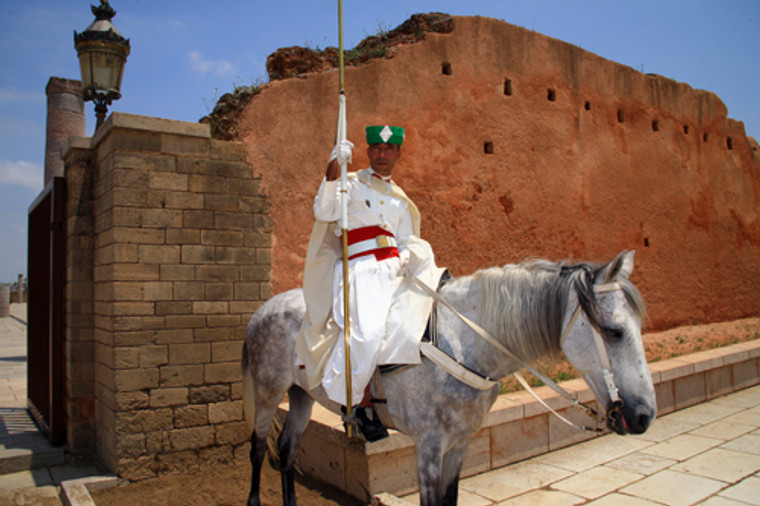
It basically meant we were always ahead of the other tour buses as we headed to the Royal Palace and the Mausoleum which contains the tombs of Mohammed V and his two sons, King Hassan II and Prince Moulay Abdallah.
After lunch at a traditional Moroccan restaurant it was off to the Kasbah, a fortified city which dates back to the 12th century. It's a residential area these days and a bit of a tourist destination, but well worth a look.
The day was topped off with dinner at Jacques Pépin's restaurant on board: classic French, and pretty amazing.
Seville on our own
After our long day on the road, it was back on the bus for a trip up to Seville from our next port of call, Cádiz. This time it was just an hour and a half each way, and we had just over four hours in one of Spain's most visited cities.
The excursion we booked was called "Seville On Your Own", which is pretty much self-explanatory. We were escorted up by a tour guide who was happy to walk people around, or, as we did and most people did, you could go off on your own to take in this fascinating city.
In typical Spanish style, nothing really gets going until lunchtime, and that was good in a way, as it meant we could wander around the cathedral, the third biggest in the world and the biggest Gothic cathedral in the world, without too much of a crowd.
It was then off to the old Jewish Quarter of Santa Cruz, with its maze of narrow alleyways and cafés and bars hidden down little pockets, and finally we found the Plaza de España a little bit by accident, but that's all part of the fun of walking Seville.
Lisbon
It's one of the grand maritime cities of the world, and sailing into Lisbon is one of those experiences which stays with you for a long time. The likes of Bartolomeu Dias and Vasco da Gama sailed in and out of the Tagus River as they explored the world, and we had a picture-perfect blue-sky day for an exploration of the Portuguese capital.
Lisbon is a city rich in history, and wandering its cobbled streets reveals a new monument or historical sight at every turn. We were docked at the Santa Apolónia cruise terminal, which was a good result, as it means you can step off the cruise ship and land straight in the Alfama, one of Lisbon's most interesting and historical neighbourhoods, with its steep winding streets and traditional trams (most emblazoned with advertising). This is where locals go about their daily activities as they have done for centuries. Because it's built on solid bedrock, it survived the massive 1755 earthquake, and it retains its medieval charm with its maze of narrow streets, whitewashed houses with washing hanging outside and pretty flowerpots in the windows. In some places the trams get so close to the buildings that there's only just enough room for a person between them, and this separates the tourists from the locals. The Alfamans aren't bothered about being sandwiched up against a wall, but for visitors it's a different story altogether!
Tucked in behind the Alfama is one of Lisbon's most famous landmarks, the Castelo de São Jorge, which commands sweeping views of the city from every turret of the Moorish castle. It's well worth the visit, as it's a great way to get your bearings in this remarkable city. It's one of those historical sites that is hard to actually date. The fortifications date back to the second century BC, but human remains have been dated back to the sixth century BC, and at various times the site was occupied by Celtic tribes, Phoenicians, Greeks, Carthaginians, Romans, Visigoths and Moors. This is a great way to understand the complex and turbulent history of Lisbon.
The Baixa is the main city centre, and the elegant Rua Augusta runs its length down to the Praça do Comércio, the impressive square which sits at the heart of Lisbon's maritime culture.
These are pretty much the main tourist sights, and along the way there are all manner of museums, such as the Military Museum. You could spend days wandering the city and still not cover that much.
A lost day off Biarritz, and Soulac 1900
Then came an enforced sea day, because big surf off the coast of Biarritz meant the decision was made to abandon any hope of using the tender service to get us ashore at the local port of St Jean de Luz.
The next day we had the choice of an excursion to the Médoc vineyards and then into the city of Bordeaux, but some of the local French crew insisted we head into the nearby town of Soulac-sur-Mer, which was holding its annual festival, Soulac 1900. It's something of a trip down memory lane to a bygone era. This quaint little seaside town really turned on the charm, and it turned out to be an inspired choice.
It's one of those really unique European experiences: locals dressed up in clothing from the turn of the previous century and really enjoying what was a beautiful day out. There were classic outfits, classic cars, circus performers, a market, a fun fair and, mostly, lots of people really getting into the spirit of the festival.
La Rochelle and Concarneau
The next two days were a real taste of the French Atlantic, with La Rochelle and Concarneau on the itinerary. These two little ports are rated among the prettiest and most engaging in the region, and for good reason. La Rochelle is the main maritime harbour in the area, founded in the 10th century, and much of its medieval architecture remains; these days tourism is a big factor in its survival.
The main attraction here is the Vieux Port, or Old Harbour, and it's the type of place you can wander at leisure while making café stops at regular intervals along the way. There are also lots of harbour cruises available, but to be honest it's best to be on foot to really experience a place like this.
Concarneau is a slightly smaller, but no less pretty, town than La Rochelle, and it has its own charm, with the medieval Ville Close as the main attraction. It's connected to the town by a drawbridge, and it's a walled town with shops and restaurants set up for tourists. It is a little twee, but fun all the same. There's also a fishing museum for those who are interested in that sort of thing, reflecting Concarneau's maritime past.
A few of the other guests had complaints about these ports of call, or one complaint really: not enough shopping! In this part of the world, local shops close in the afternoon and only tourist shops and some cafés and restaurants stay open.
St Malo, city of the corsairs, and Dinan
St Malo was once the base of the feared privateers, or pirates, and it's one of the top tourist drawcards in Brittany. This walled city is steeped in maritime history, and in the Middle Ages it was a fortified island at the mouth of the Rance River, commanding total control of the estuary and the open sea all around it.
It's hard to believe, but St Malo was all but destroyed during the Second World War, as a German fleet was based here. The ramparts that ring the city surprisingly survived the bombing, but the town itself was mostly destroyed, although today you'd hardly believe it. Locals insisted the town be rebuilt in the traditional manner, and that's exactly what they did, brick by brick. Looking at it now you can see that the buildings are sort of new, even though they resemble 18th and 19th century architecture, but somehow it still feels real.
St Malo was founded in the 6th century and has always asserted an independent streak, and it eventually became the home of the corsairs, French privateers who were in effect pirates. They survived by plundering ships coming up the English Channel and paid their own tax to the French monarchy, who were naturally very happy with the whole deal. Unlike "normal" pirates, though, they didn't kill or harm their captives. They simply took whatever was on board, and the ship, and quite often crews knew this and quickly surrendered, as they knew their lives were safe.
We tendered ashore from Marina and first went up to the medieval town of Dinan on a ship's tour. It's about a 45-minute drive from St Malo and well worth the effort. This is a place where you simply wander the streets and lanes of original medieval architecture, and it too is surrounded by a rampart.
Dinan was founded in the 9th century by monks and is perhaps the most beautiful of the villages in Brittany, with its narrow cobbled lanes and original wooden houses. We had about an hour and a half here to wander, which is about right, and then we walked the ramparts of St Malo when we returned.
Paris in a day from Honfleur
From the pretty and quaint seaside towns of the French Atlantic to the grandeur of one of the most majestic European cities. Paris has attracted pretty much every superlative, and it's one of those places which has to be seen to be believed. It had been nearly 14 years since we were last there, so we opted for a ship's tour again, even though it's a two-and-a-half-hour drive up from the port of Honfleur and the same coming back.
The tour was called "Paris Highlights" and it really was a whistlestop tour, given that five hours is spent travelling. We drove past the Eiffel Tower in our motor coach, then through the Latin Quarter, past the Louvre and Notre Dame Cathedral, and then had a one-hour-15-minute stop in the Opéra district for lunch on our own. The Opéra district is quite touristy and wasn't really a great place for us, but most of the other guests loved it because of the "shopping opportunities".
Fortunately, we made a 15-minute stop at the Place de la Concorde, which gave us a few photo ops, and a couple of vintage Citroëns did a drive-past, which added to the French flavour. From here you can also see straight up the Champs-Élysées to the Arc de Triomphe, and our final stop was at a square which offers a fantastic view of the Eiffel Tower. We only had five minutes there, but that was enough to grab that photo of one of the world's most famous tourist icons.
A long day, but worth it just to see Paris again, even if only briefly.
Copenhagen
This was the end of the line for this European cruise on Oceania Marina, and luckily it was an overnight in Copenhagen, one of Europe's most elegant cities, with a sail-in that's hard to beat. After sailing out of Honfleur and up through the North Sea, we rounded the top of Denmark and turned into the Øresund, with Sweden on one side and Denmark on the other. There are just a few kilometres between the two countries at Helsingør on the Danish coast and Helsingborg on the Swedish coast.
Copenhagen itself is an ancient maritime city, and cruise ships dock at Langelinie, which is becoming one of the most popular ports in Europe thanks to its great location. From here it's just a two-minute walk to the Little Mermaid, one of Copenhagen's most photographed landmarks. This is one of those great walking cities, and from the ship it was easy to hit the city's other attractions, including Amalienborg Palace with its colourful changing of the guard, and the bustling Nyhavn district, a 17th-century canal area which is now a bit of a restaurant and bar strip, with brightly coloured 17th and 18th-century townhouses and historic wooden ships lining the waterfront.
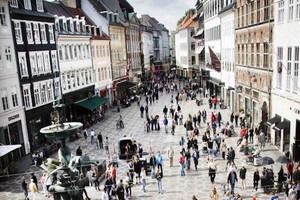
Strøget is the pedestrian strip running through the centre of the city. It's the longest pedestrian shopping street in Europe, this is where you'll find the city's most famous stores, and the most expensive ones as well, and it connects City Hall Square on one side of the city with Kongens Nytorv, the King's New Square, on the other.
This is the type of place you can spend days just wandering, but we only had the one day before heading home.
The ship: a boutique hotel on the water
This itinerary was so port-intensive, with so many fascinating places, that we focused on the destinations and the excursions and left the ship until last, so to speak. With any new build (Marina was launched in February 2011) there's always a degree of excitement, but in this case the hype surrounding Marina's debut was well justified.
With room for 1,280 guests, Marina looks like a standard new cruise ship from the outside, but step aboard and you realise this is a super-chic hotel on the water that wouldn't be out of place on the streets of New York or South Beach in Miami. From the moment you walk into the main atrium, where a stunning Grand Staircase dominates, with plants dotted around to add a touch of intimacy, it's obvious this is more boutique hotel than cruise ship.
There's artwork, both contemporary and traditional, at every turn and a real flow to the design of the public areas, and because she's brand new, Marina has a wow factor that's going to change the landscape in the upper-premium category of cruise ship. She's nearly twice the size of Oceania's other vessels, including Regatta, Insignia and Nautica, and there's a real sense of space on board, even on sea days at near full capacity.
We were in a Concierge-class verandah stateroom, a tasteful combination of grey and chocolate-brown furnishings with dark wood accents. The queen-size bed was to die for, the linens and pillows of the highest quality, and the balcony generous, easily big enough to set up for a romantic dinner at sea. There's a couch and flat-screen TV with a reasonable choice of television entertainment (it's not on-demand) and a work desk with wi-fi, which means you can check email from the comfort of your stateroom. A laptop was also supplied. The granite and marble bathrooms are nice, with separate shower and bathtub, but the shower is small, perhaps the only downside of the accommodation. There's also a walk-in wardrobe. The Concierge class is well worth booking, as you get a welcome bottle of champagne, complimentary clothes pressing on arrival and access to the Concierge Lounge on Deck 9, a little oasis with newspapers, magazines, coffee machine, snacks and soft drinks. There's also a concierge, naturally, who was great at helping with restaurant reservations and advice on ports of call.
Dining: where Marina comes into her own
As for dining and food, this is where Marina comes into her own. To be perfectly honest, this is among the best cruise ship cuisine at sea, with 10 different venues to choose from, most of them with no extra surcharge. The Grand Dining Room is the main venue and has a fantastic maritime feel, thanks to the massive windows and the fact that most of the restaurant has a high ceiling stretching two levels up, a rarity on a cruise ship which creates a grand atmosphere. The food is continental, but it also offers tempters from the specialty restaurants and healthy options from the Canyon Ranch spa menu.
The Terrace Café and outdoor Waves Grill are the casual options, but the Big Four, so to speak, are Jacques (French classic), Red Ginger (Asian fusion), Toscana (classic Italian) and Polo Grill (New York steakhouse). All the restaurants are overseen by Jacques Pépin, and the restaurant named after him is one of the most indulgent food experiences at sea. All the classics are on the menu, from escargots to foie gras, and this is an evening that needs to be lingered over. We went there twice and each time it was an amazing experience, as was Red Ginger, which serves cuisine from China, Thailand, Malaysia, Indonesia and Vietnam; if you like it spicy, just say so and the chefs will knock it up a notch. We could only get into Toscana and Polo Grill once, as demand was high, so I'd recommend booking these in advance if possible.
The two restaurants that carry a charge we didn't try, and to be honest the other restaurants were outstanding on their own. La Reserve offers seven-course dinners paired with wines (we heard other guests raving about it), and Privée is a seven-course degustation affair tailored to personal tastes.
There's also new ground broken with the Bon Appétit Culinary Center, which features 24 cooking stations, with executive chef Kathryn Kelly revealing some of her secrets. We stuck our heads in one day for a quick peek and nearly all the spots were taken.
There's a cosy library, a fully equipped fitness centre (we didn't even get a chance to look at this), the Canyon Ranch Spa, and up top is Marina's sun deck, one of the ship's great features. The saltwater pool is complemented by two jacuzzis, and there's plenty of deck space with comfortable loungers and some really decadent double beds at one end. And if you're not happy just soaking up the sun, on the top deck there are putting greens, golf cages and shuffleboard.
The only downside of this cruise was that we didn't get a chance to spend more time on board. Each day there was a fantastic new port of call to explore, and with only two sea days we feel we didn't really get to experience Marina properly. But then I bet most people who've had the good fortune to experience her say the same thing.
More on UTM: Ship Review: Oceania Marina
Four hours in Seville and a single sunny day in Lisbon only scratch the surface of Spain and Portugal, and Pack Ya Bags can build a slower, on-the-ground itinerary through both for travellers from Australia and New Zealand. Start the conversation at info@packyabags.com
Editor's note. This article brings together UTM's original Oceania Marina Europe cruise despatches, first published as a series, into a single piece. Consolidated and fact-checked on 21 September 2026.
Oceania Cruises: +61 (2) 9959 1370, www.oceaniacruises.com.au.
- By:
- Ben Hall