



Costa Rica in the Dry Season: Wildlife, Cloud Forest and Coast, from Australia and New Zealand
Write a Review
Costa Rica in the Dry Season: Wildlife, Cloud Forest and Coast, from Australia and New Zealand
Costa Rica's dry season is the reason most first-time visitors from Australia and New Zealand go when they do. On the Pacific side it runs roughly from mid-December to April, which lines up neatly with our summer holidays, Easter and the April school break. The catch is that "dry season" describes one side of the country far better than the other, and the wildlife runs to calendars of its own. This guide sets out what the dry months actually deliver, region by region, and how the long trip across the Pacific shapes the itinerary.
What the dry season actually delivers
Through most of the country, the year divides into a dry season and a green season. On the Pacific slope and in the central highlands, the dry months generally run from mid-December to April. May to November is the green season, with September and October usually the wettest stretch. Green-season days often start clear and turn to afternoon showers, so the rain is less of a wall than the word suggests — but roads, rivers and trails all behave differently once it sets in.
The dry season brings three things that matter for a first trip:
- More settled weather on the Pacific coast. Beach days are easier to plan around, and the north-west in particular can go weeks without meaningful rain.
- Wildlife drawn towards water. In the drier north-west, wildlife can sometimes be easier to find around rivers, waterholes and the remaining green forest cover. It is a gentler effect than the dry-season gatherings of an African safari, but it can help.
- Clearer cloud-forest days. The highland reserves are never truly dry — they are cloud forests for a reason — but the dry months tend to bring more open views between the mists.
The trade-off is that this is also the busiest part of the year, especially around Christmas and Easter, when Costa Ricans travel too. That is why itineraries for this window are usually shaped well ahead of time.
Two coasts, two calendars
The Caribbean side does not follow the Pacific pattern. Rain there is spread more evenly through the year, and the drier spells tend to fall around February to March and again around September to October — almost the reverse of the Pacific. The southern Caribbean, around Puerto Viejo and Cahuita, often enjoys some of its sunniest weather in September and October. It means the wettest months on one coast can be among the better months on the other, and a trip that takes in both sides needs to be planned with both calendars in mind rather than one general rule for the country.
For most itineraries timed to the Australian and New Zealand summer or Easter holidays, the Pacific side is the anchor, with the Caribbean added for what it does best: canals, rainforest and a slower pace.
Region by region
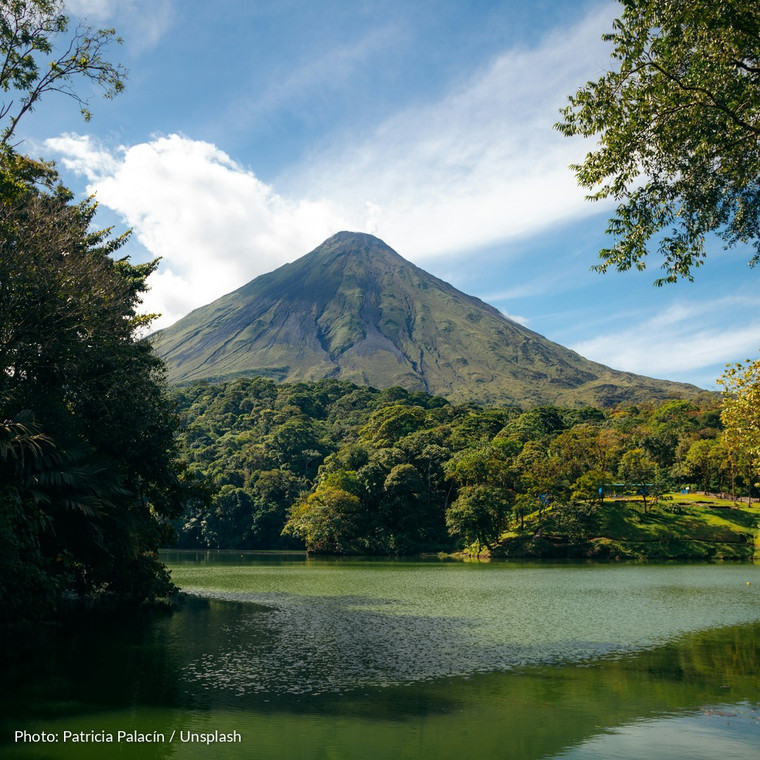
Arenal. The near-perfect cone of Arenal Volcano rises over rainforest and a large lake in the north. It is the base for hanging-bridge walks, waterfalls, rafting and soaking in the hot springs the area is known for. The volcano itself is often wrapped in cloud, even in the dry months, so a clear view is a bonus rather than a promise. Arenal has been in a resting phase since 2010, so visitors come for the scenery, rainforest and hot springs rather than lava. Two or three nights here is a common rhythm.
Monteverde. High on the continental divide, Monteverde is the classic cloud forest — moss, epiphytes, cool air and suspension bridges at canopy height. The road up is slow and winding, which is part of why it pairs well with Arenal. Guided walks, especially early or at night, make a real difference to what you see.
Manuel Antonio. On the central Pacific coast, a small national park where rainforest runs down to white-sand coves. Sloths, monkeys and coatis are commonly seen, often within a short walk of the beach. Its popularity is its one drawback, so an early start with a naturalist guide is the usual approach.
Guanacaste. The dry north-west is Costa Rica's beach country — long Pacific beaches, dry tropical forest and some of the steadiest sunshine of the dry season. It suits the end of a trip, when the aim is to slow down. The beach towns of the Nicoya Peninsula, just to the south, share the same dry-season weather, though getting there involves longer road or ferry transfers.
The Pacuare River. On the Caribbean slope, the Pacuare is one of the best-known whitewater rivers in Central America, running through deep rainforest gorges. Some itineraries raft in to a riverside lodge and stay the night, which turns a day of rafting into one of the most memorable parts of the trip. It suits active travellers; families with younger children usually choose gentler options.
Tortuguero. On the northern Caribbean coast. No road runs into the village: most visitors drive to a river landing and continue by boat through the canals, and light-aircraft services are also available. Life here runs along the canals, and the wildlife is watched from the water: caimans, river turtles, herons, howler monkeys and, with luck, sloths in the overhanging trees.
The wildlife calendar
Costa Rica has wildlife all year round, but some of its best-known moments are seasonal. These windows are typical patterns, not guarantees — they shift with conditions from year to year.
- Humpback whales off the Pacific coast: northern-hemisphere humpbacks are generally seen roughly December to March, with southern-hemisphere whales arriving in a separate season, roughly July to October. Costa Rica is unusual in receiving both.
- Leatherback turtles on the Pacific coast: nesting at a few protected beaches generally runs roughly October to March, on guided night visits only.
- Resplendent quetzals around Monteverde: typically easiest to see in the nesting season, roughly February to May, when wild avocado trees are fruiting.
- Green turtles at Tortuguero: nesting is a July-to-October story. A family visiting in April will see the canals and the rainforest wildlife, not the main green-turtle nesting season — still a highlight, but worth knowing before you set expectations at home.
Getting there from Australia and New Zealand
There is no direct flight, and the journey is a long one. Most travellers connect through the United States, though routes via Canada, Mexico or South America can also work depending on schedules and fares. Which way works best depends on your departure city, the season and how the connections line up on the day, so it is worth weighing total travel time rather than the first leg alone.
Either way, the journey shapes the itinerary more than people expect:
- Allow a recovery night in San José. Arriving late after a long trip and driving straight into the mountains is hard going. A night near the capital lets you start the first transfer fresh.
- Put the beach last. Ending on the Pacific coast gives the trip a slower final few days before the long journey home.
- Distances look short on a map. Mountain roads are slow, so two or three nights per stop tends to work better than one-night hops.
- Check entry and transit rules for every country on the way. A US connection has its own requirements, even if you never leave the airport.
When to add Panama
Panama sits just across the Caribbean border, and adding it suits travellers who have the time and want a second country without another long-haul flight. For travellers already on Costa Rica's Caribbean side, the natural continuation runs down the coast to Bocas del Toro, an archipelago of islands and over-water towns, then on to Panama City and the Panama Canal, where the locks at Miraflores let you watch ships being raised and lowered between the oceans. Others simply take a short flight from San José or Liberia to Panama City.
It works best for travellers with roughly two weeks or more, and for those already drawn to the Caribbean side. For a first visit with less time, Costa Rica on its own — volcano, cloud forest and coast — is plenty.
Planning for the 2027 dry season
For travel from mid-December to April, three to six months is usually enough for flexible dates. Christmas, New Year and Easter often benefit from planning six to nine months ahead, and the April school holidays are worth treating the same way. Costa Rica's smaller lodges and eco-lodges, in places such as Monteverde and Tortuguero, have limited rooms and can fill earlier, so the more specific the stay, the more lead time it needs. School-holiday dates vary between Australian states and New Zealand, so check yours before settling on a window.
Before you go, check current government travel advice — Smartraveller in Australia and SafeTravel in New Zealand — along with entry requirements for Costa Rica and any country you transit.
Frequently asked questions
When is the best time to visit Costa Rica from Australia or New Zealand?
For most first visits, the Pacific dry season from roughly mid-December to April, which falls across the summer, Easter and April school holidays. The Caribbean side has its own pattern and can suit other months.
Is Costa Rica a good family destination for the April school holidays?
Yes, for many families. April falls within the dry season on the Pacific side, and wildlife is often easy to see in places like Manuel Antonio and Tortuguero. Green turtle nesting at Tortuguero is mainly a July-to-October event, so an April visit is about the canals and the rainforest rather than the main nesting season.
How long should a first trip to Costa Rica be?
Given the travel time from Australia and New Zealand, around ten to fourteen days on the ground lets you see the volcano, the cloud forest and the coast without rushing. Add a few more days if you plan to include Panama.
Is the green season worth considering?
It can be, for travellers who don't mind afternoon showers and want greener landscapes and quieter parks. September and October are usually the wettest months on the Pacific side, so they suit the Caribbean coast better.
When you're ready to talk it through
Some readers will already have the April holidays circled and just need the pieces put together; others are still deciding between a volcano, a canal and a beach. Either way, Pack Ya Bags is happy to help. Send them a few lines about who's travelling, roughly when, and anything that's already fixed.
They'll come back with ideas that fit your dates and pace. You can reach them at info@packyabags.com.
- By:
- David Chandraraj
- Published:
- 4 October 2026


